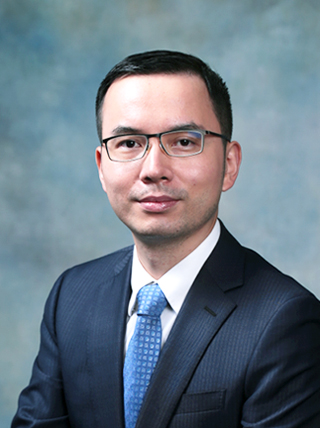
Tao Hong
09/2002- 07/2010, Peking Union Medical College, Beijing, Doctor of Medicine
09/2010-Present, Department of Neurosurgery, Xuanwu Hospital, Capital Medical University, Beijing, Residency/Attending Surgeon
04/2024-Present, Xuanwu Hospital, Vice President
Professor Tao Hong 's research group is committed to addressing the significant national needs in the prevention and treatment of Central Nervous System (CNS) hemorrhagic diseases.
Our group focuses on the mechanisms and therapeutic strategies for CNS hemorrhagic diseases. In our previous work, we concentrated on elucidating the genetic mechanisms of CNS hemorrhagic diseases, developing relevant basic research platforms, and innovating therapeutic approaches. We have developed surgical strategies for vascular malformations, identified the core genetic mechanisms of somatic mutations in vascular malformations, established disease animal models, revealed key pathogenic pathways, and identified potential drug targets. These efforts have propelled the development of a future precision treatment system that integrates surgery and pharmacotherapy for vascular malformations. Our work has resulted in 22 articles in prestigious journals, such as Brain, JAMA Neurology, Exp Mol Med, Angiogenesis, American Journal of Human Genetics.
Benefiting from the advanced platform of the National Center for Neurological Disorders, our group has access to independent laboratory space and ample research funding. We have assembled an outstanding research team and fostered a collaborative atmosphere that integrates clinicians and scientists. In addition, we collaborate with multiple renowned research institutions, including the Peking University Biomedical Pioneering Innovation Center (BIOPIC), the Chinese Institute for Brain Research, Beijing (CIBR, Beijing), and the Beijing Institute of Life Sciences. These partnerships enable us to excel in multidisciplinary and multi-institutional collaborations.
Our main research directions include:
1) Risk stratification and early intervention strategies for cerebral hemorrhagic diseases based on clinical cohorts and biospecimens.
2) Pathogenesis and drug development for cerebral hemorrhagic diseases using animal models and multi-omics technologies.
3) Clinical research on new diagnostic and therapeutic strategies for cerebral hemorrhagic diseases.
Honors and Awards:
08/2024 Distinguished Young Scholars Fund of the National Natural Science Foundation
05/2023 Beijing Youth Medal (30 young scholars under 45 years’ old per year)
08/2021 Outstanding Young Scholars Fund of the National Natural Science Foundation
07/2020 Beijing "Hundred, Thousand, Ten Thousand" Talent Project
Adjunct Research Positions:
2025-present Associate Editor, Journal of NeuroInterventional Surgery(JNIS)
2025-2028 Standing Committee Member and Secretary-General, the Neurointerventional Committee of the Chinese Medical Doctor Association
2024-2026 Youth Editorial Board Member, Fundamental Research
2017-present Co-President, Chinese Annual Conference on Brain and Spinal Vascular Malformation
2024-2029 Vice President, the Neurointerventional Physicians Branch of the Beijing Medical Doctor Association
2022-2026 Member of the Division of Neurosurgical Basic and Clinical Research, Chinese Neuroscience Society
2021-2023 Secretary-General, Education Committee of neurosurgery, Ministry of Health, P.R. CHINA
2019-2023 Vice President of youth committee, Chinese Stroke Association
2018-2023 Youth Committee, Chinese Neurosurgical Society
1) Hong T#, Yan Y#, Li J#, Radovanovic I, Ma X, Shao YW, Yu J, Ma Y, Zhang P, Ling F, Huang S, Zhang H* and Wang Y*. High prevalence of KRAS/BRAF somatic mutations in brain and spinal cord arteriovenous malformations. Brain. 2019;142:23-34.
2) Hong T#, Xiao X#, Ren J#, Cui B, Zong Y, Zou J, Kou Z, Jiang N, Meng G, Zeng G, Shan Y, Wu H, Chen Z, Liang J, Xiao X, Tang J, Wei Y, Ye M, Sun L, Li G, Hu P, Hui R, Zhang H* and Wang Y*. Somatic MAP3K3 and PIK3CA mutations in sporadic cerebral and spinal cord cavernous malformations. Brain. 2021;144:2648-2658.
3) Yu JX#, He C#, Ye M#, Li GL, Bian LS, Yang F, Zhai XD, Ling F, Zhang HQ* and Hong T*. The efficacy and deficiency of contemporary treatment for spinal cord arteriovenous shunts. Brain. 2021;144:3381-3391.
4) Yu JX#, Hong T#, Krings T, He C, Ye M, Sun LY, Zhai XD, Xiang SS, Ma YJ, Bian LS, Ren J, Tao PY, Li JW, Yang F, Li GL, Ling F and Zhang HQ*. Natural history of spinal cord arteriovenous shunts: an observational study. Brain. 2019;142:2265-2275.
5) Ren J#, Huang Y#, Ren Y#, Tu T, Qiu B, Ai D, Bi Z, Bai X, Li F, Li JL, Chen XJ, Feng Z, Guo Z, Lei J, Tian A, Cui Z, Lindner V, Adams RH, Wang Y, Zhao F, Körbelin J, Sun W, Wang Y, Zhang H, Hong T* and Ge WP*. Somatic variants of MAP3K3 are sufficient to cause cerebral and spinal cord cavernous malformations. Brain. 2023;146:3634-3647.
6) Ren J#, Cui Z#, Jiang C#, Wang L, Guan Y, Ren Y, Zhang S, Tu T, Yu J, Li Y, Duan W, Guan J, Wang K, Zhang H, Xing D, Kahn ML, Zhang H* and Hong T*. GNA14 and GNAQ somatic mutations cause spinal and intracranial extra-axial cavernous hemangiomas. Am J Hum Genet. 2024;111:1370-1382.
7) Tu T, Zhang S, Li J, Jiang C, Ren J, Zhang S, Meng X, Peng H, Xing D, Zhang H*, Hong T* and Yu J*. Inhibition of Angiopoietin-2 rescues sporadic brain arteriovenous malformations by reducing pericyte loss. Angiogenesis. 2024;28:1-15.
8) Tu T#, Yu J#, Jiang C#, Zhang S, Li J, Ren J, Zhang S, Zhou Y, Cui Z, Lu H, Meng X, Wang Z, Xing D, Zhang H* and Hong T*. Somatic Braf(V600E) mutation in the cerebral endothelium induces brain arteriovenous malformations. Angiogenesis. 2024;27:441-460.
9) Ren J#, Xiao X#, Li R#, Lv C, Zhang Y, Wang L, Hong T*, Zhang H* and Wang Y*. Single-cell sequencing reveals that endothelial cells, EndMT cells and mural cells contribute to the pathogenesis of cavernous malformations. Exp Mol Med. 2023;55:628-642.
10) Ren J, Wei Y and Hong T*. Combined Cranial Intraosseous and Cerebral Cavernous Malformations With Pathogenic CCM1 Germline Sequence Variations. JAMA Neurol. 2021;78:247-248.
11) Lu HH#, Li ZS#, Li JW, Li GL, He C, Ye M, Hu P, Sun LY, Ma YJ, Ren J, Ling F, Zhang HQ, Yu JX and Hong T*. The natural course, treatment outcomes, and long-term prognosis of cervical spinal cord arteriovenous shunts. J Neurosurg. 2024;141:1212-1224.
12) Yu J#, Zhang S#, Bian L#, He C, Ye M, Li G, Hu P, Sun L, Ling F, Zhang H* and Hong T*. Clinical features and outcomes of perimedullary arteriovenous fistulas: comparison between micro- and macro-type lesions. J Neurointerv Surg. 2023;15:821-827.
13) Ren J#, Jiang N#, Bian L#, Dmytriw AA, Zeng G, He C, Sun L, Li X, Ma Y, Yu J, Li G, Ye M, Hu P, Li J, Yang F, Li Q, Ling F, Zhang H* and Hong T*. Natural History of Spinal Cord Cavernous Malformations: A Multicenter Cohort Study. Neurosurgery. 2022;90:390-398.
14) Feng Y#, Yu J#, Xu J#, He C, Bian L, Li G, Ye M, Hu P, Sun L, Jiang N, Ling F, Hong T* and Zhang H*. Natural History and Clinical Outcomes of Paravertebral Arteriovenous Shunts. Stroke. 2021;52:3873-3882.
15) Ren J#, Wang D#, Wang L, Jiang C, Tian A, Cui Z, Ren Y, Bian L, Zeng G, Meng G, Shan Y, Liang J, Xiao X, Tang J, Wei Y, He C, Sun L, Ma Y, Yu J, Li G, Ye M, Hu P, Li J, Li Y, Niu L, Li Q, Ling F, Burkhardt JK, Zhang H* and Hong T*. Clinical, genomic, and histopathologic diversity in cerebral cavernous malformations. Acta Neuropathol Commun. 2025;13:23.
16) Ren J#, Hong T#, Zeng G, He C, Li X, Ma Y, Yu J, Ling F and Zhang H*. Characteristics and Long-Term Outcome of 20 Children With Intramedullary Spinal Cord Cavernous Malformations. Neurosurgery. 2020;86:817-824.
17) He Y#, Hong T#, Wang M#, Jiao L#, Ge Y, Haacke EM, Li T* and Hongqi Z*. Prevention and control of COVID-19 in neurointerventional surgery: expert consensus from the Chinese Federation of Interventional and Therapeutic Neuroradiology (CFITN) and the International Society for Neurovascular Disease (ISNVD). J Neurointerv Surg. 2020;12:658-663.
18) Ren J#, Hong T#, He C, Li X, Ma Y, Yu J, Ling F and Zhang H*. Surgical approaches and long-term outcomes of intramedullary spinal cord cavernous malformations: a single-center consecutive series of 219 patients. J Neurosurg Spine. 2019;31:123-132.
19) Hong T, Park JE, Ling F, terBrugge KG, Tymianski M, Zhang HQ* and Krings T*. Comparison of 3 Different Types of Spinal Arteriovenous Shunts below the Conus in Clinical Presentation, Radiologic Findings, and Outcomes. AJNR Am J Neuroradiol. 2017;38:403-409.